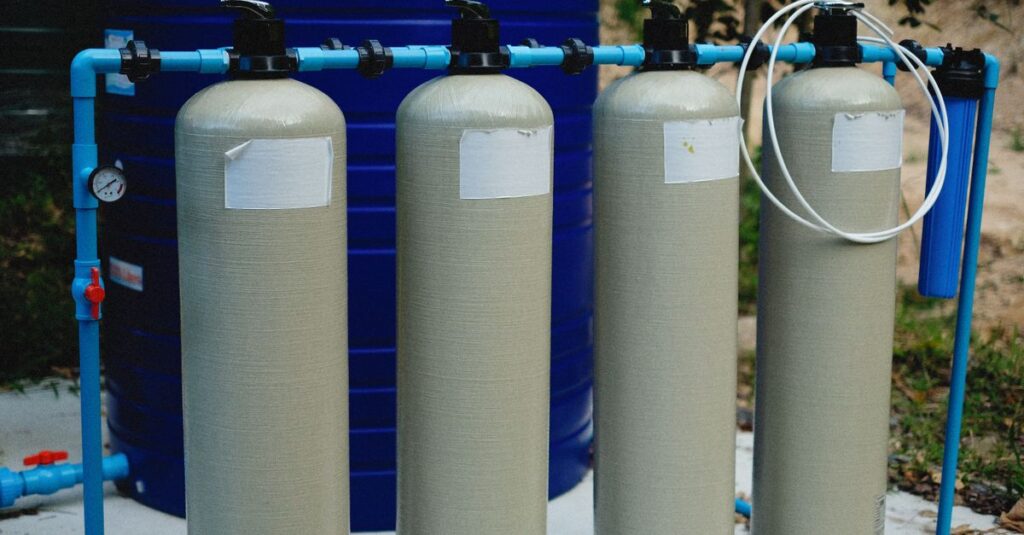
String wound filter cartridges remain a vital component in industrial filtration, offering enhanced performance and reliability across multiple sectors. These filters provide true depth filtration, capturing a wide range of contaminants while maintaining efficiency and durability. With applications spanning water treatment, pharmaceuticals, food and beverage processing, and chemical manufacturing, choosing the right string wound filter cartridge for your process needs is essential for optimising filtration outcomes. This article explores how these filters improve industrial filtration in 2026, backed by advanced manufacturing facilities like Pullner Filter in Shanghai.
Key Takeaways
- String wound filter cartridges enhance industrial filtration by providing true depth filtration with up to 98.7% efficiency for particles larger than 5 microns.
- Their unique gradient-density yarn design captures contaminants throughout the cartridge, extending filter life and maintaining consistent flow rates.
- String wound filter cartridges offer higher dirt-holding capacity and durability compared to many other filter types, making them ideal for handling high turbidity fluids in diverse industries.
- Selecting the right string wound filter cartridge involves considering micron ratings, material compatibility, and operating conditions to optimize filtration for specific industrial needs.
- Regular maintenance and monitoring of pressure drop ensure optimal performance and longevity of string wound filters, reducing downtime and operational costs.
- Manufacturers like Pullner Filter leverage advanced production techniques to customize string wound cartridges that meet stringent quality standards across sectors such as water treatment, pharmaceuticals, and food processing.
Understanding String Wound Filter Cartridges: Design and Material Composition
String wound filter cartridges consist of a cylindrical core tightly wrapped with yarn in a gradient-density pattern, looser on the outside and denser toward the inside. This unique design forms a honeycomb-like structure, essential for true depth filtration. The yarn materials vary, including polypropylene (PP), cotton, glass fiber, or other synthetics tailored for specific chemical and temperature resistance needs. Pullner Filter, based in Shanghai’s Songjiang District, leverages over 20 production lines within a 10,000 square meter cleanroom facility to manufacture these cartridges with precision. Cores are typically made from polypropylene or robust stainless steel grades like 304 and 316L to withstand high pressure and temperature, ensuring they meet stringent industrial demands.
Key Advantages of String Wound Filters in Industrial Applications
String wound filter cartridges offer significant benefits that make them ideal for industrial filtration. Their depth filtration design provides three to five times the dirt-holding capacity compared to surface-only filters, effectively trapping contaminants throughout their structure. Efficiency is high, with single-pass removal rates reaching up to 98.7% for particles larger than 5 microns. Durable construction allows these filters to operate under pressures approaching 1.6 MPa and handle frequent start-stop cycles. Their chemical compatibility spans water, oils, and harsh chemicals, making them versatile across sectors including automotive manufacturing and food processing. Also, their long service life lowers both operational downtime and replacement costs, directly boosting system reliability.
Filtration Mechanism: How String Wound Cartridges Capture Contaminants
String wound cartridges perform filtration by directing fluid flow from the outer layers inward to the core. Larger particles such as sand, rust, and silt are captured in the loosely wound outer yarn, while finer colloids and suspended solids are trapped in the denser inner layers. This depth filtration minimizes surface blinding seen in other filters, extending cartridge life and maintaining flow rates. Contaminants disperse throughout the cartridge’s length instead of clogging the surface, ensuring consistent filtration performance during extended operation. This mechanism is crucial for industries requiring particle removal without compromising flow, like semiconductor manufacturing or pharmaceutical processing, where particulate control is strict.
Comparing String Wound Cartridges to Other Filtration Technologies
When compared to melt-blown filters, string wound cartridges generally provide lower cost options with greater dirt-holding capacity for larger particles. Melt-blown types, but, excel in removing very fine contaminants below 1 micron. Unlike surface filter cartridges, string wound filters’ depth structure enables longer service life and better handling of high turbidity fluids, which is valuable in fluctuating industrial conditions. For high-purity demands, surface membranes or micro membrane filters may be preferred, but string wound cartridges remain a strong choice for pre-filtration stages. Manufacturers like Pullner Filter harness the advantages of string wound technology by integrating it with advanced materials and quality control to tailor performance to industry needs.
Selecting the Right String Wound Filter Cartridge for Your Industry Needs
Choosing the appropriate string wound filter cartridge depends on key parameters such as micron rating, material compatibility, and operating conditions. Micron ratings range from coarse 50–100 μm for pretreatment of rust and sand to fine 1–5 μm for high-purity water and pharmaceutical applications. Polypropylene is suited for acids, alkalis, and most chemicals, while cotton may be preferred for certain organic oils. Glass fiber or stainless steel cores withstand higher temperatures and corrosive media. Additional considerations include temperature, pressure, flow rate, cartridge length, and connection types. Collaborating with manufacturers like Pullner Filter ensures cartridges match specific process environments, optimizing filtration efficiency and lifespan.
Maintenance and Longevity: Ensuring Optimal Performance of String Wound Filters
Maintenance of string wound filter cartridges centers on monitoring pressure drop and dirt accumulation. As sediment builds, pressure increases, signaling the need for cartridge replacement to avoid system strain. Depending on contamination levels, replacement intervals typically range from six to twelve months. Pullner Filter’s designs incorporate durable materials that sometimes allow limited backwashing to extend service life. Regular inspection and timely maintenance are essential for sustaining filter performance, especially in demanding applications such as industrial water treatment or automotive manufacturing, where filtration reliability directly impacts operational efficiency and product quality.
Case Studies: Real-World Improvements Using String Wound Filter Cartridges
String wound filter cartridges have proven effective across multiple industries. In municipal water treatment, they serve as a crucial pretreatment step, protecting reverse osmosis and ultrafiltration membranes from sediment damage. Food and beverage processors use them to clarify syrups, juices, oils, and wine, ensuring product purity without affecting taste or quality. Chemical manufacturers rely on these cartridges for filtering acids, alkalis, and plating solutions, meeting strict process standards. Pharmaceutical firms incorporate string wound filters to maintain particulate limits in process water and intermediates. Pullner Filter supports these applications by supplying customized cartridges that meet specific industry standards, backed by rigorous quality assurance from their Shanghai facility.
About Pullner
Business: Pullner
Spokesperson: Lucy
Position: Sales Manager
Phone: 0086-21-57718597
Email: [email protected]
Location: LB19-Office No.1207, Jebel Ali Free Zone, Dubai, United Arab Emirates
Website: https://www.pullnerfilter.com/
Frequently Asked Questions About String Wound Filter Cartridges
What are string wound filter cartridges and how do they enhance industrial filtration performance?
String wound filter cartridges consist of a cylindrical core wrapped with yarn in a gradient-density pattern, enabling true depth filtration. This design captures a wide range of particle sizes throughout the cartridge, delivering high dirt-holding capacity, durability, and efficiency, which enhances filtration in various industrial processes.
How do string wound filter cartridges compare to other filtration technologies like melt-blown filters?
Compared to melt-blown filters, string wound cartridges offer lower cost and greater dirt-holding capacity for larger particles. While melt-blown filters excel at removing very fine contaminants below 1 micron, string wound filters provide longer service life and better handling of high turbidity fluids, making them ideal for pre-filtration stages.
What materials are used in the construction of string wound filter cartridges?
String wound cartridges use yarn materials such as polypropylene, cotton, glass fiber, or other synthetics chosen for specific chemical and temperature resistance. The core is typically made from polypropylene or stainless steel grades 304 or 316L to withstand high pressure and corrosive industrial conditions.
What industries benefit most from using string wound filter cartridges?
Industries including municipal and industrial water treatment, food and beverage processing, chemical manufacturing, and pharmaceuticals benefit from string wound filter cartridges. These filters protect downstream equipment, clarify products, and ensure compliance with strict particulate standards across diverse industrial applications.
How should I select the right string wound filter cartridge for my industrial needs?
Selecting the appropriate cartridge depends on micron rating, material compatibility, and operating conditions such as temperature and pressure. For example, polypropylene is suitable for acids and alkalis, while cotton suits organic oils. Consulting with manufacturers ensures the cartridge matches specific process requirements and maximizes filtration efficiency.
What maintenance is required to ensure optimal performance of string wound filter cartridges?
Maintenance involves monitoring pressure drop to detect dirt accumulation and replacing cartridges typically every six to twelve months. Some polypropylene designs allow limited backwashing to extend service life. Regular inspection and timely replacement prevent system strain and maintain reliable filtration performance in demanding industrial environments.